Blown-In Insulation in Germantown, MD
(240) 202-4025
Germantown Blown-In Insulation
Is your attic insulation thinner than it should be? In a lot of Germantown homes, particularly those built before the mid-1990s, the attic insulation has settled well below the depth needed for our climate. Blown-in insulation is the most practical way to fix that.
Blown-in insulation is installed by blowing loose fill material into the attic space, which allows it to fill in around existing insulation, cover gaps, and bring overall coverage up to where it needs to be. It's a faster, less disruptive process than removing old material and starting over, and in many cases it's the right call when the existing insulation is still in decent shape.
Germantown Spray Foam Insulation installs blown-in insulation for homeowners throughout Germantown and Montgomery County. If your attic hasn't been looked at in years, or if your energy bills feel higher than they should for the size of your home, the attic insulation depth is a good place to start.
How Blown-In Insulation Works
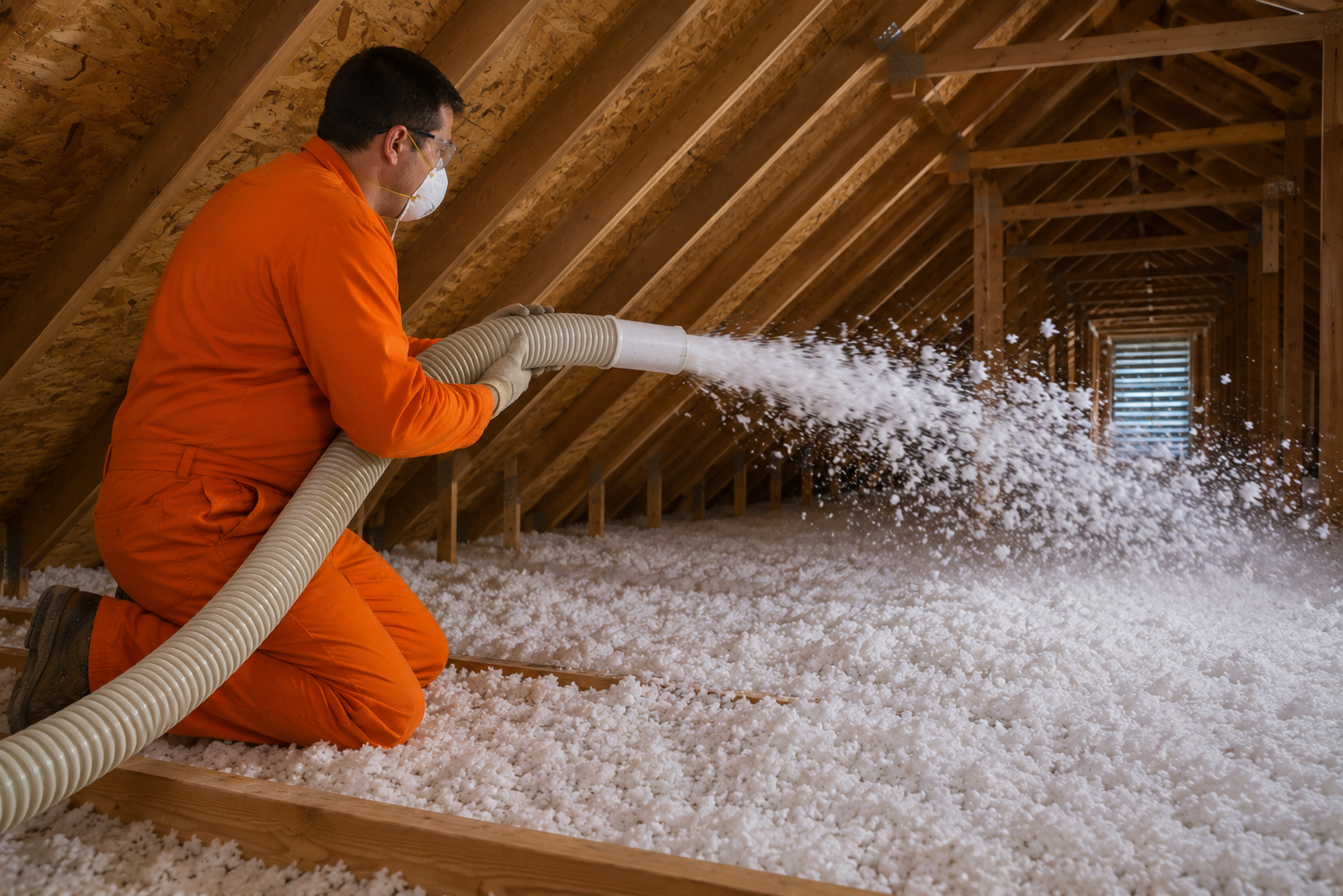
Blown-in insulation uses a machine to blow loose-fill material into the attic space through a hose. The material spreads and settles into place, filling gaps and covering the existing attic floor evenly. It's a cleaner and faster installation process than rolling out batts by hand, and it conforms well to irregular joist spacing and obstructions.
The two most common materials used in blown-in applications are cellulose and fiberglass. Cellulose is made from recycled paper and treated for fire resistance. Fiberglass loose-fill uses the same glass fiber material as batts but in a loose form that fills spaces more evenly. Both are effective; the right choice depends on the attic conditions, moisture exposure, and existing insulation type.
In most Germantown attic situations, blown-in insulation can be added directly over existing material as long as the current insulation is dry, clean, and not contaminated. If there are moisture issues, pest damage, or mold present, removal comes first.

Request a Free Estimate!
Why So Many Germantown Attics Are Underinsulated
A large portion of Germantown's housing was built between the 1970s and the early 1990s, when insulation standards were lower than they are today. The townhomes and row houses that make up a significant share of neighborhoods like Churchill Village were built to the energy codes of that era, not current ones.
Over time, insulation in these homes has settled, compressed, and in some cases absorbed enough moisture from Maryland's humid summers to lose a portion of its effectiveness. What looked adequate when the home was built may now be performing at a fraction of its original R-value.
Current recommendations for our climate zone call for attic insulation in the range of R-49 to R-60. Homes from the 1970s and 1980s often have attic insulation performing well below that range after decades of settling and degradation. Blown-in is the most practical way to bring those levels up without a full removal.
When Existing Insulation Needs to Come Out First
Adding blown-in over existing material only makes sense when the existing insulation is still in acceptable condition. There are situations where removal is the right first step before any new material goes in.
Removal is typically necessary when:
• There is visible mold or signs of moisture damage in the existing material
• Pest or rodent activity has contaminated the insulation
• The existing material is wet or has absorbed significant moisture over time
• There is extensive air sealing work needed below the insulation that requires clear access
• The existing material is so degraded that adding over it doesn't make economic sense
We'll tell you honestly whether removal is warranted or whether adding blown-in over the existing material is the right approach. We don't recommend removal if it's not necessary.
Blown-In Insulation Questions
How deep should blown-in insulation be in a Germantown attic?
For our climate zone in Maryland, the current recommended range is R-49 to R-60 for attic insulation. The actual depth needed depends on the material being used since cellulose and fiberglass loose-fill have slightly different R-values per inch. We measure what's already in the attic and add enough to reach the recommended level.
Will blown-in insulation settle over time?
Some settling is normal in the first year after installation. This is accounted for during installation by adding material to a depth that allows for the expected settling and still lands at the target R-value. After the initial settling period, blown-in insulation is generally stable and doesn't degrade significantly under normal attic conditions.
How disruptive is blown-in insulation installation?
For a standard attic job, the process is relatively straightforward. The installation equipment stays outside or in the garage, and a hose runs into the attic through an access hatch. Most attic blown-in jobs can be completed in a few hours. There's minimal disruption to the living space below.
Is blown-in better than spray foam for attics?
It depends on what the attic needs. If the main issue is insulation depth and the attic doesn't have significant air sealing problems, blown-in is often the more cost-effective choice. If air leakage is a significant part of the comfort problem, spray foam may produce better results. In some cases, the right approach is air sealing with spray foam first and then adding blown-in on top. We'll look at the attic and give you a straight answer on what makes sense.